
By Helen Sullivan
Picture: All Rights Reserved
On June 11th, at least ten members of the national touring cast of Les Misérables will sit out a performance at the Kennedy Center with the US President expected in attendance. This is the latest response to an unprecedented move that had the President fire the board of the Kennedy Center and install himself as Chairman, ousting President Deborah Rutter, and intending to mold the venue’s programming to his liking. This has caused several productions, including Hamilton, and performers pulling out of scheduled shows. In a statement, composer Lin-Manuel Miranda stated, “This latest action by Trump means it’s not the Kennedy Center as we knew it” and producer Jeffrey Sellers saying, “The Kennedy Center was not created in this spirit, and we’re not going to be a part of it while it is the Trump Kennedy Center…it pains me deeply they took it over… they said it’s not for all of us.” The musical was supposed to be a part of the 250th anniversary of the Declaration of Independence, but the creative team does not want to be a part of the President’s imposition of his ideological and cultural views on the once prestigious venue.
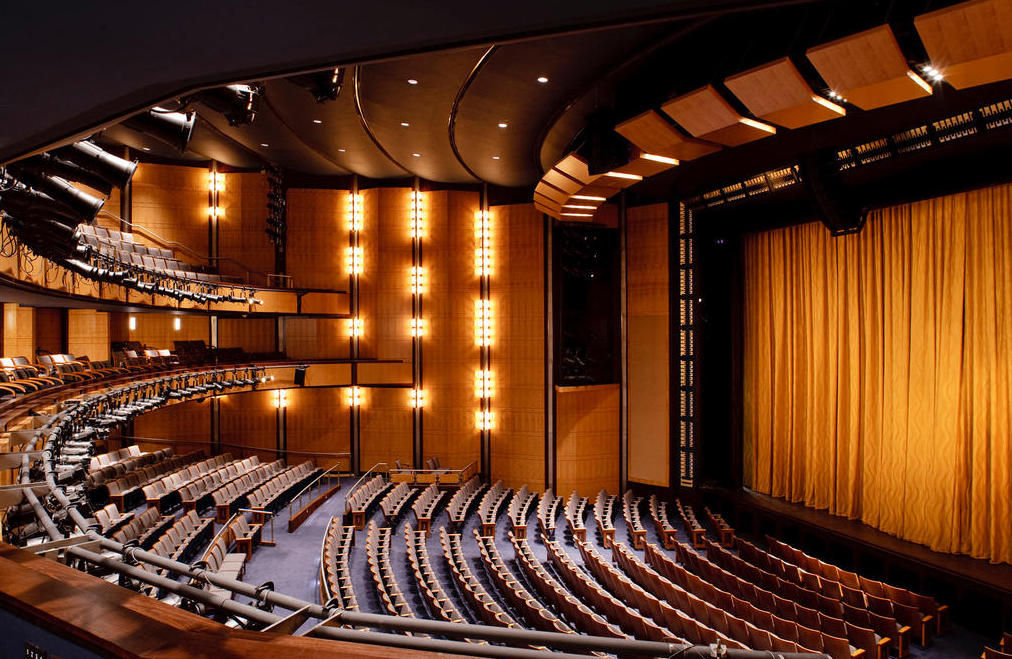
The Kennedy Center for the Arts in Washington DC has been a beacon for top performers of all genres, and it has always been considered a great honor to perform there. It stands as the cultural center of the arts in the United States and the official home of the National Symphony Orchestra and Washington National Opera. Renamed in 1971 to honor President John F. Kennedy after his assassination, the center opened to lift the public’s spirits after World War II and became a cultural hub for all genres. Trump’s decision to take control of the venue is reminiscent of other autocrats’ actions to control the arts and what the public sees. In Nazi Germany, Joseph Goebbels Propaganda Ministry controlled the news and used radio and film to promote Hitler’s messaging.
The use of media to shape public opinion is not new, but in the United States, where freedom of expression is a core principle, it is an ominous sign of the current administration’s intentions. The Kennedy Center has long been apolitical, with Democratic and Republican presidents alike celebrating the arts at the annual Kennedy Center Honors. In 2017, during his first year in office, Trump agreed not to attend the annual event when attendees expressed their intention to boycott the ceremony after the attack in Charlottesville. However, in his second term, he has instead taken the driver’s seat and intends to steer the programming to reflect his cultural ideology.
In his firing of former President Deborah Rutter, Trump cited poor management of the Kennedy Center. Rutter has refuted this assertion in a statement sent to the media and published to her website saying, “I am deeply troubled by the false allegations regarding the management of the Kennedy Center being made by people without the context or expertise to understand the complexities involved in nonprofit and arts management.” Trump criticized the center for a lack of maintenance and blamed it on bad management, which Rutter indirectly responded to by pointing out the decreased funding from the federal government.
This had led the Kennedy Center to prioritize the funding, which has led to a backlog of maintenance, not unlike many federal buildings in Washington D.C. After Trump’s takeover, a budget of $250 million has been approved by a House committee, about six times the amount the Center received previously. The previous budget had been approved by Trump appointees to the board. Trump’s takeover of the Kennedy Center has also resulted in the workers planning to unionize after several layoffs and a lack of transparency. Union organizers have turned in signed union cards to the National Labor Relations Board, which will inform the leadership of the Kennedy Center. Workers have cited the new leadership, revenue and private donations as the main reasons for unionization. Revenue for the Kennedy Center has also dropped 36%, $1.2 million, in subscription sales in addition to cancellations and boycotts. The former employees that have shared this information did so “to show that mismanagement by the new leadership is becoming a real problem for the health of the organization.”
Trump’s actions against freedom of speech and the press took a new turn with an executive order directing the Corporation for Public Broadcasting to cease funding for the Public Broadcasting Service (PBS) and National Public Radio (NPR), citing perceived liberal bias. Both PBS and NPR are national institutions, created through the Public Broadcasting Act of 1967, and have provided media throughout the country, regardless of political affiliation. PBS and NPR have taken legal action by suing the Trump Administration. In NPR’s lawsuit, the organization accused the administration of retaliation and argued the executive order violates their First Amendment and was executed on authority he does not have.
The CEO of NPR, Katherine Maher, said, “By basing its directives on the substance of NPR’s programming, the executive order seeks to force NPR to adapt its journalistic standards and editorial choices to the preferences of the government if it is to continue to receive federal funding.” Days after NPR’s lawsuit, PBS followed suit, filing a lawsuit saying the order was unconstitutional and the president does not have the authority to cut funds, and the First Amendment prohibits funding being received based on views expressed. The lawsuit states, “The executive order does not attempt to hide the fact that it is cutting off the flow of funds to PBS because of the content of PBS programming and out of a desire to alter the content of speech.” A spokesman for PBS said the network “reached the conclusion that it was necessary to take legal action to safeguard public television’s editorial independence, and to protect the autonomy of PBS member stations.”
It is clear through the Trump Administration’s actions that they intend to undermine public media and use funds to shape the views expressed. Freedom of expression is a cornerstone of democracy, and the role of the media is an important tool to express concerns about the state of the world and the government’s actions.1984, George Orwell’s book, which serves as a cautionary tale, warns of the dangers of the suppression of individuals’ thoughts. Published after World War II, Orwell based many of the concepts on Soviet ideology. Arthur Miller’s The Crucible serves as an allegory to McCarthyism, relating the persecution of suspected communists to the Salem Witch Trials. At the current revival of Cabaret, the then Emcee Adam Lambert took the opportunity at curtain call on January 29th emphasizing the importance of the show and hoping people were awakened after seeing it.
The cast members of Les Misérables who choose to sit out the performance are standing up to a President and administration that are determined to shape the media to their cultural views. Performers have performed at the Kennedy Center under both Democratic and Republican presidents, but the current administration’s actions strike at the very heart of democracy and a free society and should concern anyone who values freedom of speech and the press.

 curtaincallbway.com